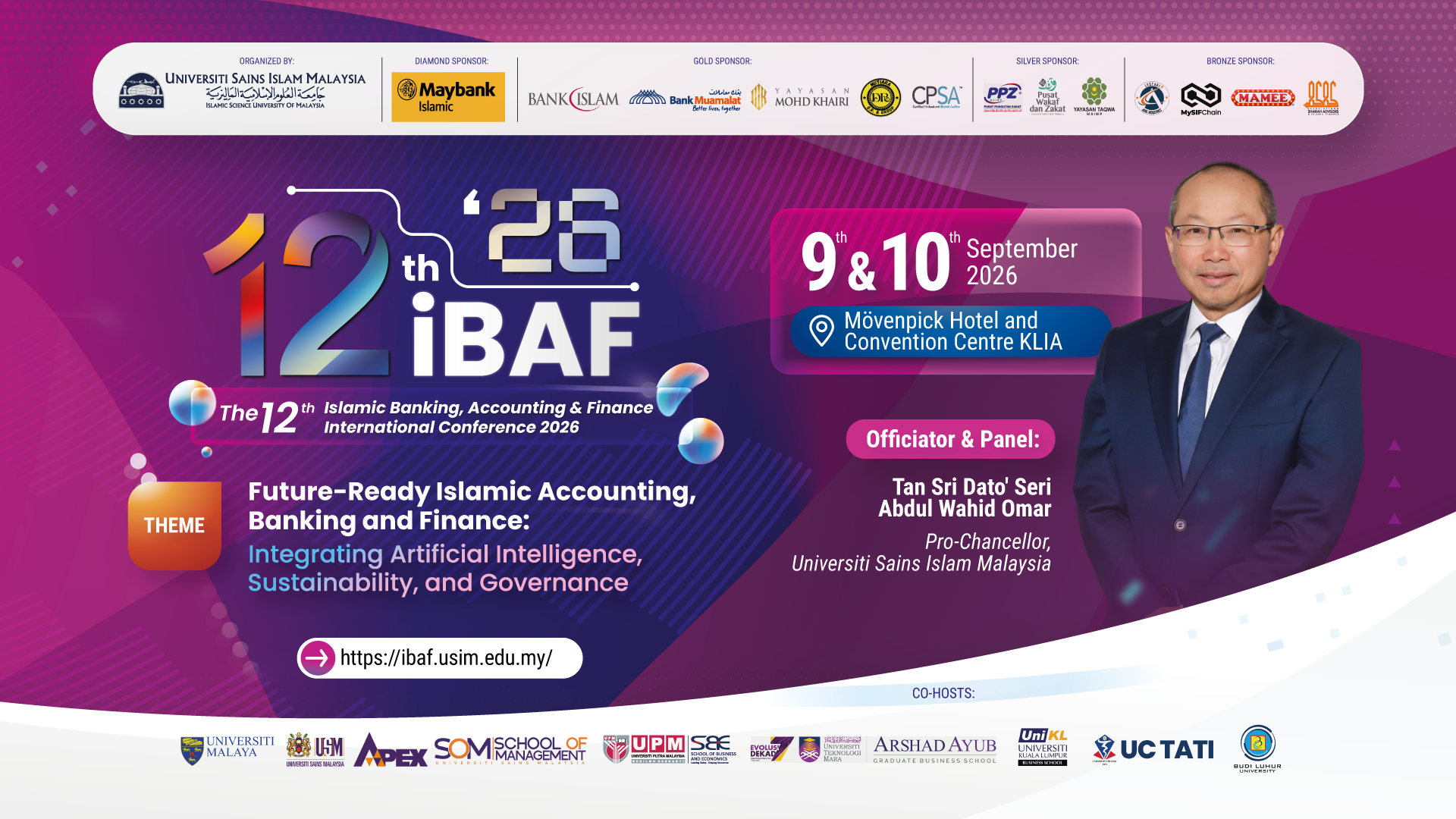
FOSTERING DIGITAL ETHICS: THE ROLE OF CHARACTER BUILDING IN THE ERA OF AI AND ISLAMIC FINANCE
DOI:
https://doi.org/10.33102/ada0x202Keywords:
Artificial Intelligence, Character Building, Digital Ethics, Islamic Finance, Maqasid al-ShariahAbstract
Background: The rapid integration of Artificial Intelligence (AI) and digital technologies is fundamentally reshaping the landscape of Islamic accounting, banking, and finance. While AI offers unprecedented opportunities for operational efficiency and sustainable growth, it simultaneously introduces complex ethical, transparency, and governance challenges. Problem Statement: However, there is a critical gap in addressing the human element: the foundational role of character building and internal moral governance among the professionals utilizing these technologies. Objective: This study aims to explore the intersection of AI integration, character building, and governance within the Islamic financial sector, proposing that true sustainability requires a synthesis of advanced technology and deeply rooted ethical values. Methodology: A comprehensive literature review was conducted, synthesizing contemporary research across AI in finance, corporate governance, digital ethics, and Islamic moral frameworks (such as Maqasid al-Shariah). Findings: The review reveals that sustainable AI governance in Islamic finance cannot rely solely on external compliance or algorithmic auditing. It requires robust internal character building rooted in core Islamic principles like Amanah (trustworthiness), Adalah (justice), and Ihsan (excellence). The literature suggests that cultivating digital ethics and moral resilience is the most effective safeguard against AI-driven risks, such as algorithmic bias, data privacy breaches, and unethical financial modeling. Conclusion: To achieve a truly "future-ready" Islamic financial ecosystem, institutions and educational bodies must prioritize human-centric governance. We propose a conceptual framework where character building is integrated as a mandatory foundation in financial training, ensuring that AI adoption aligns with both technological advancement and sustainable, ethical Islamic governance.
Downloads
References
AbdulKareem, A. K., & Oladimeji, K. A. (2024). Cultivating the digital citizen: trust, digital literacy and e-government adoption. Transforming Government: People, Process and Policy, 18(2), 270–286. https://doi.org/10.1108/tg-11-2023-0196.
Akbarighatar, P. (2025). Operationalizing responsible AI principles through responsible AI capabilities. AI and Ethics. https://link.springer.com/content/pdf/10.1007/s43681-024-00524-4.pdf.
Akter, N., Nepo, M. N. I., Chowdhury, M. S., Sadique, M. S., Haque, M. E., Bhuiyan, T., & Hasan, M. (2026). Responsible AI integration in higher education: drivers and effects in the context of Bangladesh. The International Journal of Information and Learning Technology. https://doi.org/10.1108/IJILT-09-2025-0268.
Al-Hajaya, K. (2025). Academic integrity is under fire in the Generative AI age; insights from accounting educators. Higher Education, Skills and Work-Based Learning, 16(1), 237-253. https://doi.org/10.1108/heswbl-02-2025-0060 .
Alkhwaldi, A. F., Abdulmuhsin, A. A., Masa’deh, R., & Abu-AlSondos, I. A. (2025). Business intelligence adoption in higher education: the role of data-driven decision-making culture and UTAUT. Journal of International Education in Business, 18(4), 484-504. https://doi.org/10.1108/jieb-08-2024-0110.
Anwar, S., Memon, H., & Soomro, B. A. (2026). The role of digital leadership in enhancing E-knowledge, organizational agility and innovation. Asian Education and Development Studies. https://doi.org/10.1108/AEDS-04-2025-0168.
Arianpoor, A., & Abdollahi, A. (2024). A new challenge in accounting education-convergence of maturity model, education and evaluation in accounting. Accounting Research Journal, 37(2), 211-233. https://doi.org/10.1108/arj-09-2023-0240.
Asad, M. M., Rind, A. A., & Almusharraf, N. M. (2025). Challenges and mitigating strategies for sustainable development of digitally transformed Community 5.0. Asian Education and Development Studies. https://doi.org/10.1108/AEDS-04-2025-0167.
Baker, R. S., & Hawn, A. (2022). Algorithmic Bias in Education. International Journal of Artificial Intelligence in Education, 32(4), 1052-1092. https://www.sciencedirect.com/science/article/pii/S1560429226002350.
Ballantine, J., Boyce, G., & Stoner, G. (2024). A critical review of AI in accounting education: Threat and opportunity. Critical Perspectives on Accounting, 99, 102711. https://www.sciencedirect.com/science/article/pii/S1045235424000108.
Barrett, C., & Gosling, M. (2025). Social value in the Further Education and Skills sector in England. Education + Training. https://doi.org/10.1108/ET-08-2025-0681.
Barus, O. P., Hidayanto, A. N., Handri, E. Y., Sensuse, D. I., & Yaiprasert, C. (2025). Shaping generative AI governance in higher education: Insights from student perception. International Journal of Educational Research Open, 8, 100452. https://www.sciencedirect.com/science/article/pii/S2666374025000184.
Bond, M., Khosravi, H., De Laat, M., Bergdahl, N., Negrea, V., Oxley, E., Pham, P., Chong, S. W., & Siemens, G. (2024). A meta systematic review of artificial intelligence in higher education: a call for increased ethics, collaboration, and rigour. International Journal of Educational Technology in Higher Education, 21(1), 4. https://link.springer.com/content/pdf/10.1186/s41239-023-00436-z.pdf.
Cho, C. H., & Costa, E. (2024). Sustainability accounting education: challenges and outlook. International Journal of Sustainability in Higher Education, 25(7), 1412-1425. https://doi.org/10.1108/IJSHE-02-2024-0152.
Clark, S., Mucinskas, D., Barendsen, L., McHugh, K., & Cantor, A. (2025). Global youth perspectives on ‘good work’ role models; a qualitative study of character strengths and behaviors. Journal of Character Education, 21(1-2), 5-18. https://doi.org/10.1108/jced-08-2025-0007.
Contreras, E., & Garcia, P. K. (2025). Insights on integrating servant leadership and character formation-alumnae perspectives from a youth development program in the Philippines. Journal of Character Education, 21(1-2), 30-45. https://doi.org/10.1108/jced-09-2025-0010.
Dang, T. V., Le, H. H., & Pham, T. T. H. (2026). The evolution of open pedagogy in higher education: a bibliometric perspective. Asian Association of Open Universities Journal. https://doi.org/10.1108/AAOUJ-06-2025-0070.
Ekasari, K., Djamhuri, A., Eltivia, N., & Miharso, A. (2026). Ethics in motion-a transformative pedagogy of repetition for future-ready accounting education. International Journal of Ethics and Systems. https://doi.org/10.1108/IJOES-07-2025-0404.
Elbanna, S., & Armstrong, L. (2023). Exploring the integration of ChatGPT in education: adapting for the future. Management and Sustainability: An Arab Review, 3(1), 16-29. https://doi.org/10.1108/msar-03-2023-0016.
Filho, L. F. P. C., Moraes, G. H. S. M., & Gavira, M. D. O. (2026). Sustainability and higher education quality: evidence from Brazilian HEIs. International Journal of Sustainability in Higher Education. https://doi.org/10.1108/IJSHE-09-2025-1093.
Glanzer, P. L., & Cockle, T. F. (2023). Students’ Perceptions of moral change and influence in college: A Case Study of Undergraduate Seniors at a Faith-Based University. Journal of Character Education, 18(2), 23-38. https://doi.org/10.1108/jced-11-2023-0003.
Hardey, M., & Pimblett, C. (2026). The canary in the coal mine: neurodivergent learners in Education 5.0. Education Innovations: Systems and Future Learning, 1(2), 1-21. https://doi.org/10.1108/eisfl-12-2025-0065.
Hartanto, R. (2025). Ethical behavior of accounting students-exploring the impact of religious environmental background in university. Journal of Islamic Accounting and Business Research. https://doi.org/10.1108/JIABR-12-2024-0504.
Junaidi, J., Anwar, S. M., Sahrir, S., Ath-Thaariq, M., Rosdiana, S., & Imran, M. P. (2025). The role of religious social capital on students' entrepreneurial motivation-a self-determinant theory perspective. Journal of Entrepreneurship and Public Policy, 14(4), 623-641. https://doi.org/10.1108/JEPP-08-2024-0126.
Kundu, A. (2025). Crafting effective school teachers-a comparative study of Finland, Japan and India. International Journal of Comparative Education and Development, 27(3-4), 177-195. https://doi.org/10.1108/ijced-05-2024-0042.
Le, T. M. D., Nguyen, T. N. M., Trinh, N. Q., Nguyen, T. A., Nguyen, T. N. L., & Tran, N. B. N. (2026). AI dependence in higher education: effects on students’ decision-making autonomy, learning engagement, and privacy concerns. The International Journal of Information and Learning Technology. https://doi.org/10.1108/IJILT-11-2024-0276.
Lopez, A. A., Igartua, J. I., Retegi, J., Eguren, J. A., & Ibarra, D. (2025). Addressing the challenges associated with Industry 5.0 in higher education. The TQM Journal, 38(4), 713-731. https://doi.org/10.1108/tqm-12-2024-0524.
Lu, Y. C. (2025). Exploring multicultural sensitivity in character education-qualitative study comparing teachers' views on character education in Taiwan and the UK. Journal of Character Education, 21(1-2), 60-75. https://doi.org/10.1108/jced-08-2025-0006.
Ma, Y., & Wright, E. (2022). Expanding flexible citizenship-Chinese international school students and global mobilities for higher education. Studies in Transition States and Societies, 19(2), 101-115. https://doi.org/10.1108/stics-05-2022-0010.
Makmun, A. H., Yusnaidi, Y., Damrus, D., & Mardaleta, M. (2025). Role conflict and career satisfaction in a state-oriented higher education system-mediating role of three burnout subtypes. Journal of Applied Research in Higher Education. https://doi.org/10.1108/JARHE-03-2025-0204.
Mendonça, S. E., Allman, K. R., Lamb, M., & Livingston, D. (2024). Exemplars of Justice: Supporting College Students’ Critical Consciousness Development through Cross-Institutional Engagement. Journal of Character Education, 20(1), 51-68. https://doi.org/10.1108/jced-10-2024-0006.
Moraes, E. B., Kipper, L. M., Kellermann, A. C. H., Austria, L., Leivas, P., Moraes, J. A. R., & Witczak, M. (2022). Integration of Industry 4.0 technologies with Education 4.0: advantages for improvements in learning. Interactive Technology and Smart Education, 20(2), 271-287. https://doi.org/10.1108/itse-11-2021-0201.
Nanjundaswamy, A., Divyashree, M. S., Suraj, N., Kulal, A., Rahiman, H. U., & Kodikal, R. (2024). Adapting accounting education to evolving business paradigm—an Indian perspective. Journal of Applied Research in Higher Education, 17(5), 1914-1932. https://doi.org/10.1108/jarhe-04-2024-0202.
Negm, E. (2024). Investigating universities' social-marketing initiatives tkat impact students' pro-environmental behaviors. Marketing and Social Research Association Journal, 3(4), 404-420. https://doi.org/10.1108/msar-04-2023-0019.
Nguyen-Viet, B., & Doan, H. (2025). Integrating gamification and AI in higher education: motivation and learning effectiveness. Asian Education and Development Studies. https://doi.org/10.1108/AEDS-09-2025-0466.
Nurhayati, L., Supriadi, U., Jenuri, J., & Karim, A. (2025). Integrating digital citizenship and religious moderation in open and distance education-a holistic approach to character development in Indonesia. Asian Association of Open Universities Journal, 20(3), 261-275. https://doi.org/10.1108/aaouj-02-2025-0025.
Nygreen, K., & McDermott, K. (2021). Teachers’ perspectives on performance character education: Meanings, Practices, and Tensions. Journal of Character Education, 17(1), 1-18. https://doi.org/10.1108/jce-06-2021-0002.
Ofosu-Asare, Y. (2025). Guiding the future: developing an ethical framework for generative AI use in education. The International Journal of Information and Learning Technology, 43(1), 26-44. https://doi.org/10.1108/ijilt-06-2024-0113.
Pacheco, M. B., McKee, J. C., & Lai, Y. (2024). Dignity and Discourses: Student Perspectives from the Human Dignity Curriculum. Journal of Character Education, 20(1), 19-35. https://doi.org/10.1108/jced-10-2024-0003.
Pariyanti, E., Wibowo, M., Sultan, Z., & Patiro, S. P. S. (2025). Navigating the ethical dilemma in digital learning-balancing artificial intelligence with spiritual integrity to address cheating. Journal of Applied Research in Higher Education. https://doi.org/10.1108/JARHE-10-2024-0522.
Paulino, E. P., Aterrad, A. L., & Dumala-Rayray, M. (2025). When does digital engagement backfire? Curvilinear relationship in literacy. Digital Transformation and Society, 4(4), 442-464. https://doi.org/10.1108/dts-10-2024-0213.
Posillico, J. J., Stanislav, T., & Edwards, D. (2026). Development of a human-centric pedagogical ethos for construction management education amidst industry 5.0. Education + Training. https://doi.org/10.1108/ET-03-2025-0132.
Pradana, D. A., Rachman, A., Rosyidah, E., & Susanti, H. D. (2025). Exploring the integration of project-based learning and flipped classroom to enhance students' entrepreneurial skills in higher education. Higher Education, Skills and Work-Based Learning, 16(2), 329-345. https://doi.org/10.1108/heswbl-10-2025-0449.
Rodrigues, M., Garcez, A., Borges, A. P., Franco, M., & Silva, R. (2026). PTCP – scale of personality traits and creative practices: validation in higher education institutions. Journal of Applied Research in Higher Education. https://doi.org/10.1108/JARHE-07-2025-0530.
Saadeldin, M. M. K. (2026). Navigating consumers' religiosity and consumption trajectories-a narrative-biographical approach. Journal of Islamic Marketing. https://doi.org/10.1108/JIMA-10-2025-0632.
Sanusi, S., Rusnawati, R., Pelas, M. U., Halik, H., & Maksum, H. (2026). Sociology of citizenship and AI ethics: reshaping higher education. Qualitative Research Journal. https://doi.org/10.1108/QRJ-09-2024-0219.
Sony, M., & Karingada, K. T. B. (2024). Education 4.0 unravelled: deciphering critical success factors for successful implementation. Journal of Applied Research in Higher Education, 17(3), 880-903. https://doi.org/10.1108/jarhe-10-2023-0459.
Sultan, E. A. J., Abdulmuhsin, A. A., Rehman, S. U., Alkhwaldi, A. F., Abu-AlSondos, I. A., & Yaseen, S. G. (2026). Bridging minds in the metaverse: unveiling academics’ intentions through a UTAUT3 lens on relational capital integration. Information Discovery and Delivery. https://doi.org/10.1108/IDD-06-2025-0155.
Vo, N. Q. T., Tran, P. K. T., & Nguyen, D. H. T. (2026). How experiential learning and AI readiness foster career adaptation in hospitality and tourism education. Journal of Tourism Futures. https://doi.org/10.1108/JTF-10-2025-0312.
Zhou, M., Sepulveda, J., Liang, B., Linger, J., Lund, T., & Mousseau, A. D. (2023). Purpose in the Face of Adversity: The Roles of Meaning-Making and Adversity Among Purposeful College Students. Journal of Character Education, 18(2), 1-15. https://doi.org/10.1108/jced-11-2023-0002.